

Guest blogging is one of the most practical ways to build relationships with relevant publishers, introduce your brand to new audiences, and earn valuable backlinks.
But successful guest blogging is not simply about finding websites that accept outside contributors.
The real goal is to publish useful content on websites that are relevant to your industry, trusted by their audience, and capable of providing meaningful exposure for your brand.
That distinction matters for modern Link Building.
A large number of low-quality guest posts can create a bigger backlink profile without necessarily creating stronger authority. A smaller number of useful contributions on relevant publications can provide a much stronger combination of backlinks, referral traffic, brand recognition, and topical associations.
This guide explains how guest blogging works, how to identify worthwhile opportunities, how to pitch editors, and how to create guest posts that support long-term SEO growth.
What Is Guest Blogging?
Guest blogging is the process of creating an original article for publication on another website.
The publisher benefits by receiving useful content for its audience, while the contributor can gain exposure, referral traffic, brand mentions, and potentially a backlink to their website.
For example, suppose you run an SEO software company.
Instead of publishing every article on your own website, you could contribute an article about technical SEO to a respected digital marketing publication. The article could naturally reference a relevant resource on your website where that resource genuinely helps readers understand the topic.
That creates a relationship between the publisher, the topic, and your brand.
Guest blogging can therefore support several marketing goals at the same time:
- Earn relevant backlinks
- Reach new audiences
- Build industry relationships
- Increase referral traffic
- Demonstrate expertise
- Strengthen brand recognition
- Support broader link-building campaigns
The important part is that the guest article should provide genuine value to the host website’s readers.
Why Guest Blogging Matters for Link Building
Backlinks can help search systems discover and evaluate relationships between websites.
However, the number of backlinks alone does not tell you whether a link-building campaign is effective.
Context matters.
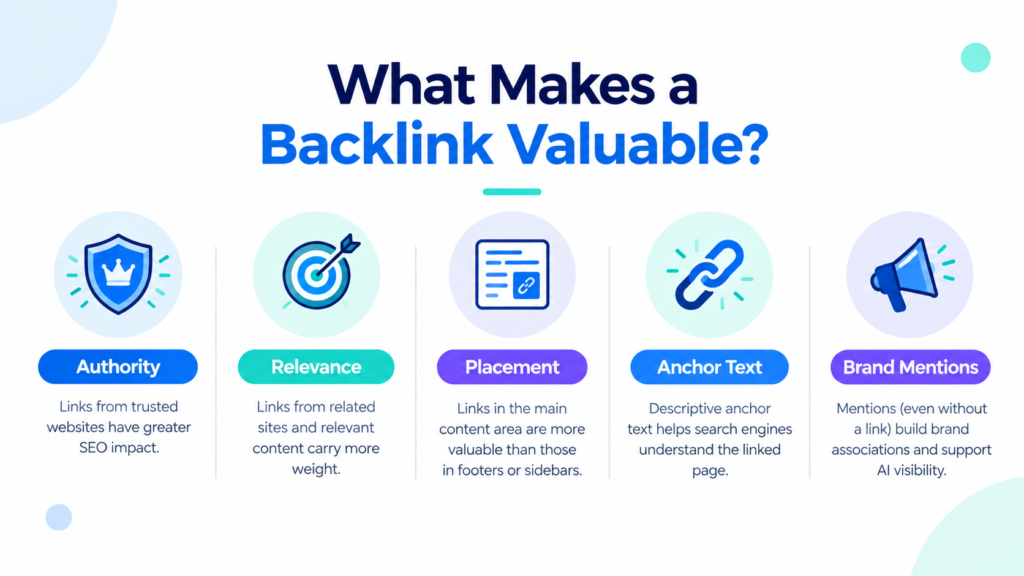
A backlink from a website that covers your industry can make more sense than a backlink from an unrelated website. Similarly, a link placed naturally inside a useful article can provide more context than a random link placed in an author profile or unrelated page.
Consider a company that sells project management software.
A backlink from an article about project management workflows is highly relevant. A backlink from an unrelated gardening article is much harder to justify.
This is why guest blogging works best when you focus on three things:
- Relevant websites
- Useful content
- Natural contextual links
The objective is not to publish the same article across dozens of websites.
Instead, create content specifically for each publication and make the backlink a natural part of the information.
What Makes a Guest Blogging Opportunity Valuable?
Not every website that accepts guest posts deserves your attention.
Before pitching a publication, evaluate the opportunity from several angles.
1. Topical Relevance
Start with relevance.
Ask whether the website’s audience would realistically care about your subject.
For example:
| Website Type | Relevance for an SEO Brand |
|---|---|
| Digital marketing publication | High |
| Technology publication | Potentially high |
| Business publication | Moderate to high |
| Cooking website | Low |
| General link directory | Very low |
A relevant publication can provide more than a backlink. It can also put your brand in front of people who are already interested in your industry.
2. Editorial Quality
Look at the articles already published on the website.
Check whether the publication:
- Uses clear editorial standards
- Publishes original content
- Has knowledgeable contributors
- Maintains consistent article quality
- Provides useful information to readers
A website filled with thin articles and obvious promotional content is generally a poor target for a long-term guest blogging strategy.
3. Audience and Traffic
Traffic should not be your only qualification, but it can help you understand whether a publication has an active audience.
Look for signs such as:
- Consistent publishing
- Organic search visibility
- Social engagement
- Comments or discussions
- Recognizable authors
- Articles that attract references from other sites
The goal is to find websites where your contribution has value beyond the backlink itself.
4. Link Context
Think about where your link could naturally appear.
A useful contextual link might point readers toward:
- A detailed guide
- Original research
- A useful tool
- A relevant case study
- A supporting tutorial
If you cannot identify a legitimate reason for linking to your website, the guest post may not be the right opportunity.
How to Find High-Authority Guest Blogging Sites
Finding guest blogging opportunities requires research rather than simply collecting websites with a “write for us” page.
Start with Google search operators.
Useful searches include:
"write for us" + SEO
"guest post" + digital marketing
"contribute" + technology
"become a contributor" + marketing
"guest article" + SaaS
You can also research where competitors have contributed.
Look at publications that regularly feature experts from your industry and identify topics that match your expertise.
Another approach is to build relationships with editors and content managers.
Follow publications you want to contribute to. Read their articles. Share useful content. Engage with their work when you have something meaningful to add.
Then approach them with a specific content idea instead of sending the same generic pitch to every website.
How to Build a Guest Blogging Strategy
A structured process makes guest blogging easier to manage.
Step 1: Define Your Goals
Decide what you want guest blogging to accomplish.
Your goals might include:
- Building relevant backlinks
- Increasing referral traffic
- Introducing a new product
- Building topical authority
- Growing brand awareness
Your goal determines which publications you should prioritize.
Step 2: Create a Prospect List
Create a simple spreadsheet containing:
| Website | Topic | Contact | Pitch Idea | Status |
|---|---|---|---|---|
| Publication A | SEO | Editor | Technical SEO | Contacted |
| Publication B | SaaS | Editor | SaaS SEO | Researching |
| Publication C | Marketing | Contributor Team | Content Strategy | Accepted |
This prevents your outreach from becoming disorganized.
Step 3: Evaluate Each Website
Do not automatically pitch every site on your list.
Review:
- Topic relevance
- Content quality
- Audience
- Existing contributors
- Editorial standards
- Link policies
- Promotional restrictions
Quality control is an important part of sustainable Link Building.
Step 4: Develop Original Topics
Look for gaps in the publication’s existing content.
For example, if a marketing publication has several general SEO articles but no detailed guide about JavaScript SEO, that gap could become your pitch.
The best topics are useful to the publication even if the backlink is removed from the equation.
How to Pitch a Guest Post
Your pitch does not need to be long.
Editors usually need to understand three things quickly:
- Who you are
- What you want to write
- Why the idea fits their audience
A strong pitch could look like this:
Hi [Name],
I’ve been reading your recent SEO coverage and noticed that your site has several practical guides for marketers. I’d like to contribute an original article explaining how JavaScript rendering can affect search visibility, including practical examples and implementation considerations.
The article would be written specifically for your audience and would not duplicate content published elsewhere.
If the topic fits your editorial calendar, I’d be happy to send a detailed outline.
Notice what this pitch does not do.
It does not demand a backlink.
It does not send a huge paragraph about the writer.
It does not use exaggerated claims.
And it does not attach a generic article that has already been published elsewhere.
How to Create a Guest Post That Earns Links
Once a publisher accepts your idea, focus on the article.
A strong guest post should feel like a normal editorial contribution rather than an advertisement.
Start with a clear introduction.
Then organize the article around practical questions the audience actually has.
Use:
- Specific examples
- Original observations
- Data when available
- Clear explanations
- Actionable steps
- Relevant screenshots or visuals
- Concise sections
Avoid filling the article with unnecessary mentions of your own company.
If every paragraph leads back to your product, the article will feel promotional.
Instead, explain the topic first and introduce your brand only where it adds genuine context.
This approach can also make the backlink more natural.
How to Use Anchor Text Naturally
Anchor text is the clickable text used for a hyperlink.
For example:
Learn more about our technical SEO checklist.
The phrase “technical SEO checklist” is the anchor text.
Descriptive anchor text helps readers understand what they will find after clicking.
However, you should avoid forcing exact-match keywords into every backlink.
For example, repeatedly using:
best SEO agency
as anchor text across guest posts can make the linking pattern look unnatural.
Instead, use a natural mixture of:
- Branded anchors
- Descriptive phrases
- Partial-match phrases
- Relevant page titles
- Natural language
The anchor should make sense in the sentence first.
Guest Blogging and Link Attributes
Not every guest post backlink will be a standard followed link.
Some publishers may use rel="nofollow", rel="sponsored", or other qualifying attributes.
That does not automatically make the contribution worthless.
A guest post can still generate:
- Referral traffic
- Brand exposure
- New audiences
- Industry relationships
- Brand mentions
More importantly, do not build your strategy around manipulating link attributes.
Google’s current spam policies specifically identify paid links intended to pass ranking credit, excessive link exchanges, automated link creation, and low-value content created primarily to manipulate ranking or linking signals as problematic practices.
Guest posts can also become problematic when publishers use third-party content primarily to exploit an established site’s ranking signals rather than to serve readers.
That makes editorial quality and genuine audience value more important than simply obtaining a followed backlink.
Common Guest Blogging Mistakes
Publishing on Irrelevant Websites
A large backlink count does not compensate for poor relevance.
Prioritize publications where your subject naturally belongs.
Sending Generic Pitches
Editors can quickly recognize mass outreach.
Personalize your pitch around the publication’s existing content.
Reusing the Same Article
Do not submit identical or near-identical articles to multiple publications.
Create original contributions for each publisher.
Overusing Promotional Links
A guest post should educate readers rather than constantly promote your website.
Chasing Link Quantity
Ten random links are not necessarily better than a few highly relevant editorial placements.
Ignoring Editorial Guidelines
If a publication limits promotional content or specifies formatting requirements, follow those rules.
A good Link Building strategy respects the publisher as well as the search engine.
How to Measure Guest Blogging Results
Backlinks are only one metric.
Track the broader effect of your guest blogging campaigns.
| Metric | What It Tells You |
|---|---|
| Referring Domains | Growth in unique linking websites |
| Referral Traffic | Visitors coming from guest posts |
| Backlinks | Links earned from publications |
| Brand Mentions | Growth in brand exposure |
| Rankings | Changes in organic visibility |
| Conversions | Business value from referred visitors |
Referral traffic is especially useful.
If a guest post generates visitors who explore your website, subscribe, request information, or become customers, the article has delivered value beyond SEO.
You should also review which topics generate the strongest response.
If technical guides consistently attract better publications than general marketing articles, use that information to improve your future outreach.
A Better Way to Approach Link Building With Guest Blogging
The strongest guest blogging campaigns treat backlinks as one outcome rather than the entire objective.
Start with the audience.
Find publications that already reach people you want to reach.
Then create something genuinely useful for those readers.
From there, earn the opportunity to mention a relevant resource naturally.
This approach creates a more sustainable cycle:
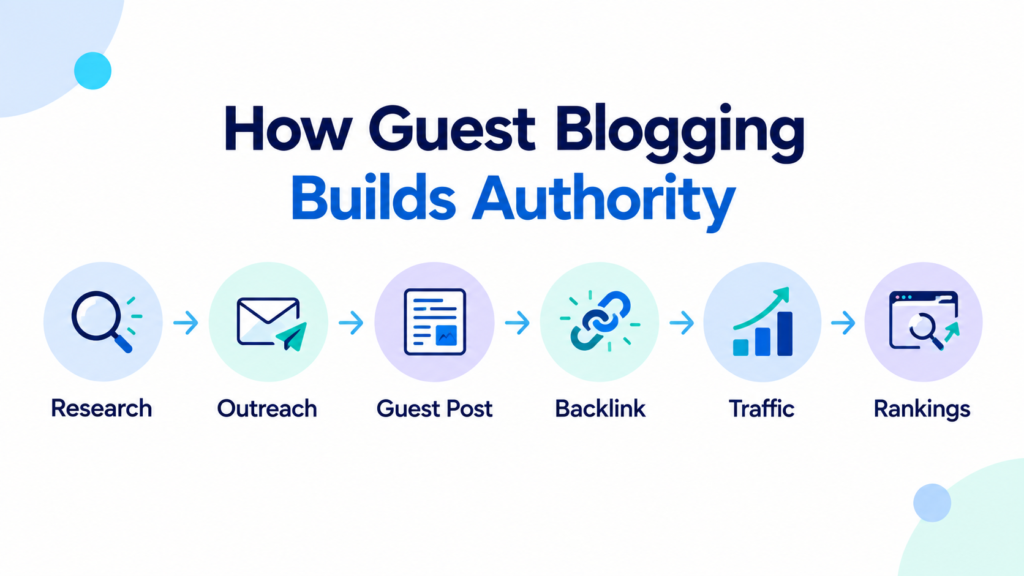
Relevant Publication → Useful Content → Brand Exposure → Contextual Mention → Referral Traffic → Stronger Authority
It also makes your outreach easier because you are offering publishers something valuable rather than simply asking for a link.
Modern search visibility increasingly depends on how well your brand fits within a broader topic and ecosystem.
Guest blogging can contribute to that ecosystem when your content appears in relevant, trustworthy contexts.
Frequently Asked Questions
Is guest blogging still effective for Link Building?
Yes. Guest blogging can still contribute to a Link Building strategy when it produces useful, relevant editorial content and earns legitimate references from appropriate publications.
How do I find high-authority guest blogging opportunities?
Research relevant industry publications, analyze competitor contributions, use search operators, and build relationships with editors and content managers.
How many backlinks should a guest post contain?
There is no universal number. Include only links that genuinely help readers understand or explore the subject. A useful article does not need multiple promotional backlinks.
Should I use exact-match anchor text in guest posts?
Avoid forcing exact-match keywords into every link. Natural, descriptive anchor text is usually more appropriate and provides clearer context for readers.
Are nofollow guest post links useful?
They can still generate referral traffic, brand exposure, and relationships even when they do not function as standard ranking-credit links.
Can guest blogging hurt SEO?
Guest blogging itself is not inherently harmful. Problems arise when it becomes part of manipulative practices such as paid links intended to pass ranking credit, excessive link exchanges, automated link creation, or low-value content created primarily to manipulate search rankings.
What is the biggest guest blogging mistake?
Focusing entirely on getting a backlink.
The strongest opportunities come from creating useful content for a relevant audience. The backlink should naturally support that content rather than become the reason the article exists.



Leave a response