

Search is changing.
For many years, people used search engines by typing a few words into Google and choosing a result from a list of websites. Today, people can ask complete questions and get direct answers from AI-powered search tools.
Instead of searching for:
“best SEO tools”
A user may ask:
“What are the best SEO tools for a small business, and which one should I start with?”
This change creates a new opportunity for businesses, bloggers, marketers, and website owners.
That opportunity is AI Search Optimization.
AI Search Optimization is the process of improving your website and content so that AI-powered search systems can better understand, find, trust, and potentially use your information when creating answers for users.
It does not mean traditional SEO is no longer useful. In fact, many of the basic principles of good SEO are still important. The difference is that businesses now need to think beyond traditional search rankings and consider how their content can work in AI-powered search experiences.
In this guide, you will learn what AI Search Optimization is, how AI search works, how it is different from traditional SEO, what GEO means, and how you can optimize your website for AI search.
What Is AI Search Optimization?
AI Search Optimization is the process of improving website content, structure, and technical SEO so AI-powered search systems can understand and potentially use that information in their answers.
Traditional SEO mainly focuses on helping web pages appear in search engine results.
AI Search Optimization takes a broader approach.
It focuses on making your content:
- Easy to understand
- Relevant to user questions
- Well organized
- Trustworthy
- Helpful
- Easy for search systems to discover
- Supported by useful information
- Connected to a clear topic
AI search systems need to understand the meaning behind a question.
For example, someone may search:
“How can I improve the speed of my WordPress website?”
A useful article should not simply repeat the words “WordPress website speed” dozens of times.
Instead, it should explain related topics such as:
- Image optimization
- Caching
- Hosting
- Plugins
- JavaScript
- CSS
- Core Web Vitals
- Content delivery networks
- Database optimization
This gives the search system more context.
The main goal is simple:
Create content that clearly answers the user’s question and provides enough useful context to understand the topic.
Why Is AI Search Optimization Important?
The way people search for information is becoming more conversational.
Users can now ask longer and more detailed questions. They may want an answer instead of a list of links.
AI-powered search experiences can summarize information, compare options, explain topics, and help users make decisions.
This creates a new challenge for businesses.
If your website only focuses on ranking for short keywords, you may miss many of the questions people ask in conversational search.
For example, a travel company might traditionally target:
“Dubai tours”
But users may ask:
“What is the best Dubai tour for a family with children visiting for five days?”
A website that clearly answers this type of question has more useful information for both users and modern search systems.
AI Search Can Change Website Discovery
In traditional search, a person may see your website in a search result and click it.
In an AI search experience, the user may first receive a summary or recommendation based on information gathered from different sources.
This means businesses should think about more than rankings.
They should also think about:
- Brand visibility
- Online authority
- Accurate information
- Helpful content
- Mentions
- Citations
- Topic relevance
- Trust
AI Search Optimization helps you prepare your website for this changing search environment.
How Does AI Search Work?
Different AI search systems work in different ways, so there is no single process that applies to every platform.
However, the basic idea can be explained simply.
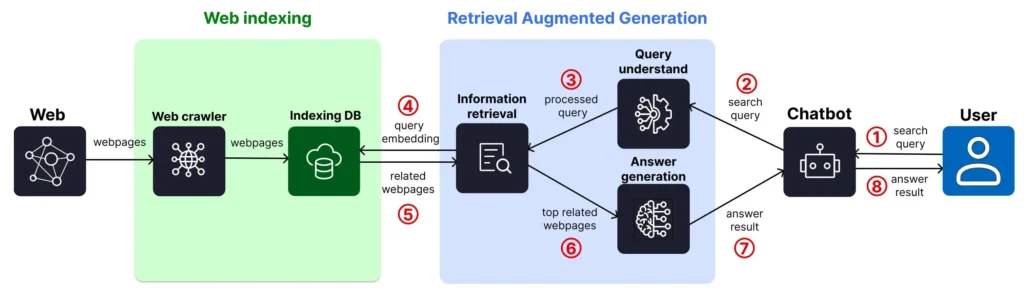
A user asks a question.
The system tries to understand the question and its meaning. It may then retrieve or use relevant information from available sources. The system processes that information and generates an answer.
A simplified process looks like this:
User Question → Understanding the Query → Finding Relevant Information → Processing Information → Generating an Answer
For example:
“What is the best way to improve local SEO?”
The system needs to understand that the user is asking about local search optimization.
It may then consider information related to:
- Google Business Profile
- Local citations
- Reviews
- Location pages
- Local keywords
- Business information
- Local links
- Structured data
The final answer may combine information from several sources.
This is why clear and well-structured content matters.
AI Search Optimization vs Traditional SEO
AI Search Optimization and traditional SEO are closely connected, but they are not exactly the same.
Traditional SEO focuses heavily on improving visibility in search engine results.
AI Search Optimization focuses on making information useful and understandable in AI-powered search experiences as well.
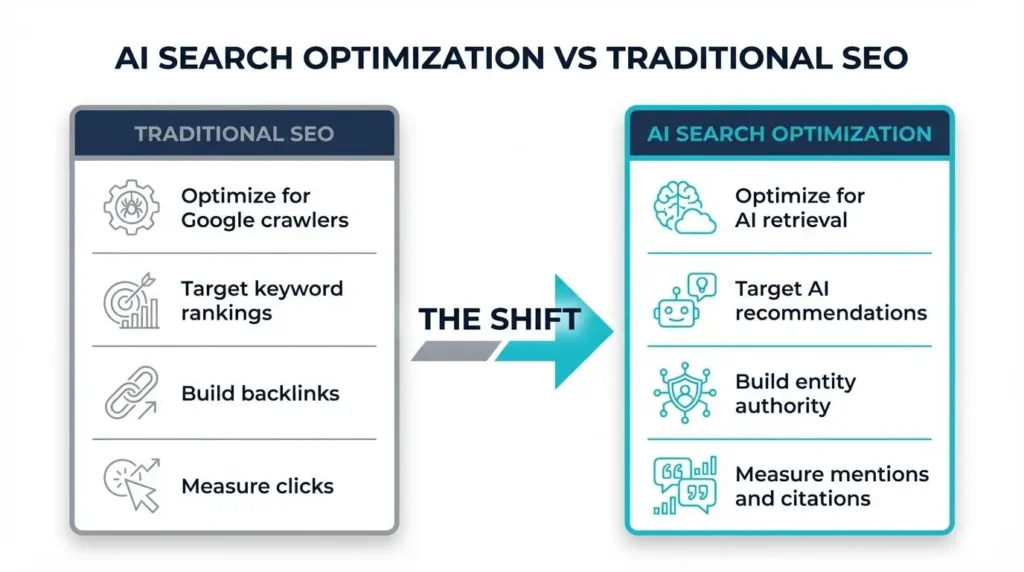
However, you should not think of these as two completely separate strategies.
The better approach is:
Traditional SEO + AI Search Optimization
Your website still needs to be technically sound.
Your pages still need useful content.
Your website still needs to be accessible to search engines.
Your business still needs authority and trust.
AI Search Optimization builds on these fundamentals.
What Is Generative Engine Optimization (GEO)?
You may have heard another term called Generative Engine Optimization, or GEO.
GEO is generally used to describe optimization strategies for generative AI systems and AI-generated answers.
The terms AI SEO, AI Search Optimization, and GEO often overlap.
A simple way to understand them is:
- SEO: Optimize websites for search engines.
- AI Search Optimization: Optimize websites for AI-powered search experiences.
- GEO: Optimize information for generative AI systems and generated answers.
There is no need to become confused by the different names.
The important thing is the strategy behind them.
Create useful, accurate, clear, trustworthy, and well-structured information.
That is the foundation.
How to Optimize Your Website for AI Search
Now we come to the most important part.
How can you actually optimize your website for AI search?
There is no secret button that makes a website appear in every AI answer.
There is also no guaranteed method for making an AI system mention a particular website.
Instead, focus on improving the quality and clarity of your website.
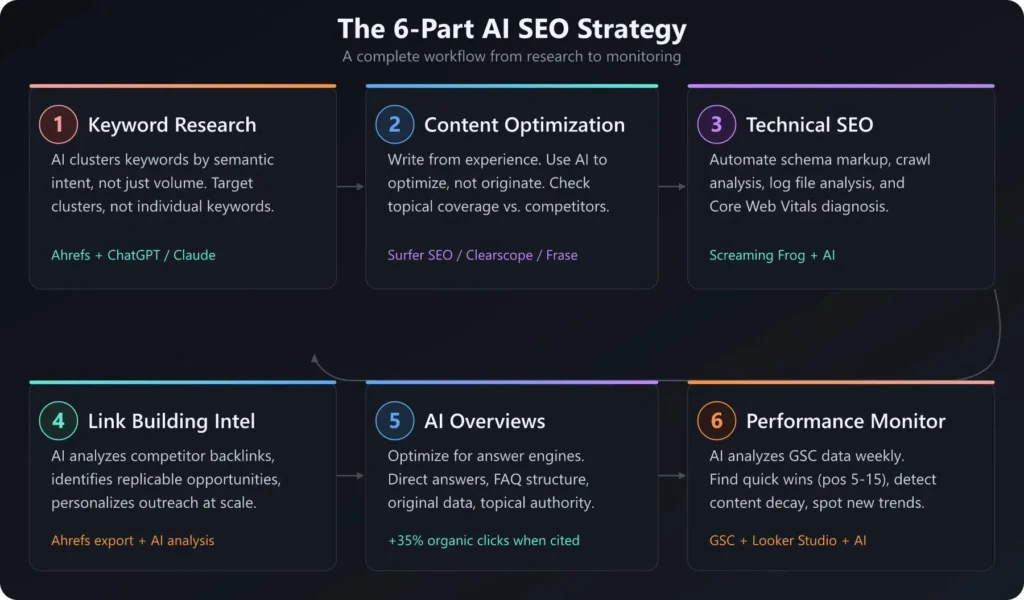
Here are the most important steps.
1. Create Helpful and Original Content
The first rule of AI Search Optimization is simple:
Create content that actually helps people.
Do not write an article only because a keyword has high search volume.
Start with the user’s problem.
Ask:
- What does the user want to know?
- What problem are they trying to solve?
- What information would help them?
- What questions might they ask next?
- What examples would make the topic easier?
- What information is missing from other articles?
For example, instead of writing a basic article called:
“SEO Tips”
Create something more useful:
“15 Practical SEO Tips for Small Businesses That Are Just Starting”
The second topic gives you a clearer audience and a clearer problem to solve.
Helpful content is more likely to satisfy the user.
And satisfying the user should always be the main goal.
2. Answer Questions Clearly
AI search is highly focused on questions and answers.
This means your content should answer important questions directly.
For example:
What is AI Search Optimization?
Start with a short answer.
AI Search Optimization is the process of improving website content and technical SEO so AI-powered search systems can better understand and potentially use that information in their answers.
Then provide the detailed explanation.
This structure works well because the reader gets the answer immediately and can continue reading for more information.
Use the same approach throughout your article.
Ask a question.
Give a clear answer.
Then explain it.
3. Use Clear Headings
Good headings make an article easier to read.
They also help search systems understand the structure of your content.
Use:
- H1 for the main title
- H2 for major sections
- H3 for supporting sections
For example:
H1: AI Search Optimization Guide
H2: What Is AI Search Optimization?
H2: How Does AI Search Work?
H2: How to Optimize Your Website for AI Search
H3: Create Helpful Content
H3: Answer Questions Clearly
This structure is much better than using random headings.
Avoid vague headings such as:
More Information
Use descriptive headings such as:
How AI Search Optimization Helps Small Businesses
A descriptive heading tells the reader and search system exactly what the section is about.
4. Cover the Topic Completely
Do not create content that answers only one small part of a topic.
If you are writing about AI Search Optimization, you should also discuss related concepts.
For example, your article can naturally cover:
- AI SEO
- GEO
- Search intent
- Semantic SEO
- Topical authority
- Structured data
- Technical SEO
- E-E-A-T
- AI search engines
- Conversational search
- AI-generated answers
This creates broader topic coverage.
For example, an article about “WordPress SEO” could also discuss:
- Technical SEO
- Site speed
- Internal linking
- XML sitemaps
- Schema markup
- Mobile SEO
- Image SEO
- Content optimization
This approach helps build topical authority.
5. Use Natural Language
One of the biggest SEO mistakes is keyword stuffing.
Do not repeat the same keyword in every sentence.
For example, this is poor writing:
AI search optimization helps with AI search. AI search optimization is important for AI search optimization because AI search optimization improves AI search optimization.
It looks unnatural and provides no value.
Instead, write naturally:
AI-powered search is changing how people find information online. Businesses can prepare by creating clear, useful content that answers real questions and provides strong context.
The topic is still clear.
The language is simply more natural.
Use related terms where they make sense.
For example:
- AI SEO
- AI search
- AI-powered search
- search optimization
- AI-generated answers
- conversational search
- generative search
Do not force them into every paragraph.
6. Match Search Intent
Search intent means understanding what a person actually wants when they search.
There are four common types of search intent.
Informational Intent
The user wants information.
Example:
What is AI Search Optimization?
Navigational Intent
The user wants to find a specific website or brand.
Example:
OpenAI ChatGPT
Commercial Intent
The user is researching before making a purchase.
Example:
Best AI SEO tools for small businesses
Transactional Intent
The user is ready to take action.
Example:
Buy SEO software
Your content should match the user’s intent.
If someone searches for:
“What is AI Search Optimization?”
They probably want an explanation.
Do not immediately give them a sales pitch.
Give them the information they requested.
7. Build Topical Authority
Topical authority means showing strong knowledge about a particular subject.
Suppose you run an SEO website.
Instead of publishing one article about SEO and then moving to unrelated topics, create a group of useful articles around SEO.
For example:
Main Topic
SEO
Supporting Topics
- Keyword research
- On-page SEO
- Technical SEO
- Local SEO
- E-commerce SEO
- Link building
- Content SEO
- Semantic SEO
- AI SEO
- Search intent
- E-E-A-T
- SEO analytics
These articles can link to each other.
This creates a connected information system.
It helps users find more information and gives your website stronger topical coverage.
8. Use Reliable Sources
Trust is important.
When you make factual claims, statistics, or technical statements, support them with reliable information.
Good sources may include:
- Official documentation
- Government websites
- Academic research
- Industry research
- Original studies
- Trusted professional organizations
- Recognized industry publications
For example, if you mention a Google search feature, it is better to reference official Google documentation where possible.
Do not add links simply to make an article look authoritative.
Every external source should have a purpose.
9. Show Who Created the Content
A website should make it clear who is behind its content.
Consider adding:
- Author name
- Author biography
- Relevant experience
- Publication date
- Updated date
- About page
- Contact information
For professional websites, these signals can help users understand why they should trust the information.
For example, an article about technical SEO is stronger when it clearly identifies an author with relevant SEO or web development experience.
10. Keep Your Content Updated
AI search and SEO are changing quickly.
Information that is correct today may need to be updated later.
Review important articles regularly.
Check:
- Statistics
- Links
- Product information
- Platform features
- Screenshots
- Examples
- SEO recommendations
- Dates
If appropriate, display:
Last Updated: August 2026
Updating content should not mean changing the date without making meaningful improvements.
Update the actual information.
11. Improve Technical SEO
AI Search Optimization does not replace technical SEO.
Your website still needs a strong technical foundation.
Important areas include:
Fast Loading Speed
Slow websites can create a poor user experience.
Mobile-Friendly Design
Your website should work properly on phones and tablets.
Crawlability
Search systems need to be able to access your pages.
Indexability
Important pages should be allowed to appear in search indexes.
XML Sitemap
A sitemap can help search engines discover website URLs.
Internal Linking
Connect related pages so users and search engines can discover useful content.
HTTPS
Use a secure HTTPS connection.
Clean URLs
Use simple, descriptive URLs.
For example:
example.com/ai-search-optimization/
is better than:
example.com/page?id=3847
Technical SEO is still part of the foundation for AI Search Optimization.
Use Structured Data
Structured data gives search engines additional information about the content on a page.
Common types include:
- Article
- Organization
- Person
- Product
- LocalBusiness
- BreadcrumbList
- FAQPage where appropriate
For example, a product page may contain structured information about:
- Product name
- Brand
- Price
- Availability
- Reviews
Structured data does not guarantee that your page will appear in an AI answer.
However, accurate structured information can make it easier for systems to understand the content and entities on your website.
Always use structured data that accurately describes the page.
How to Optimize Content for ChatGPT and Other AI Search Tools
Many website owners ask:
“How can I rank in ChatGPT?”
The important thing to understand is that there is no single ranking formula that guarantees your website will appear in every AI response.
Different AI systems and search features can work in different ways.
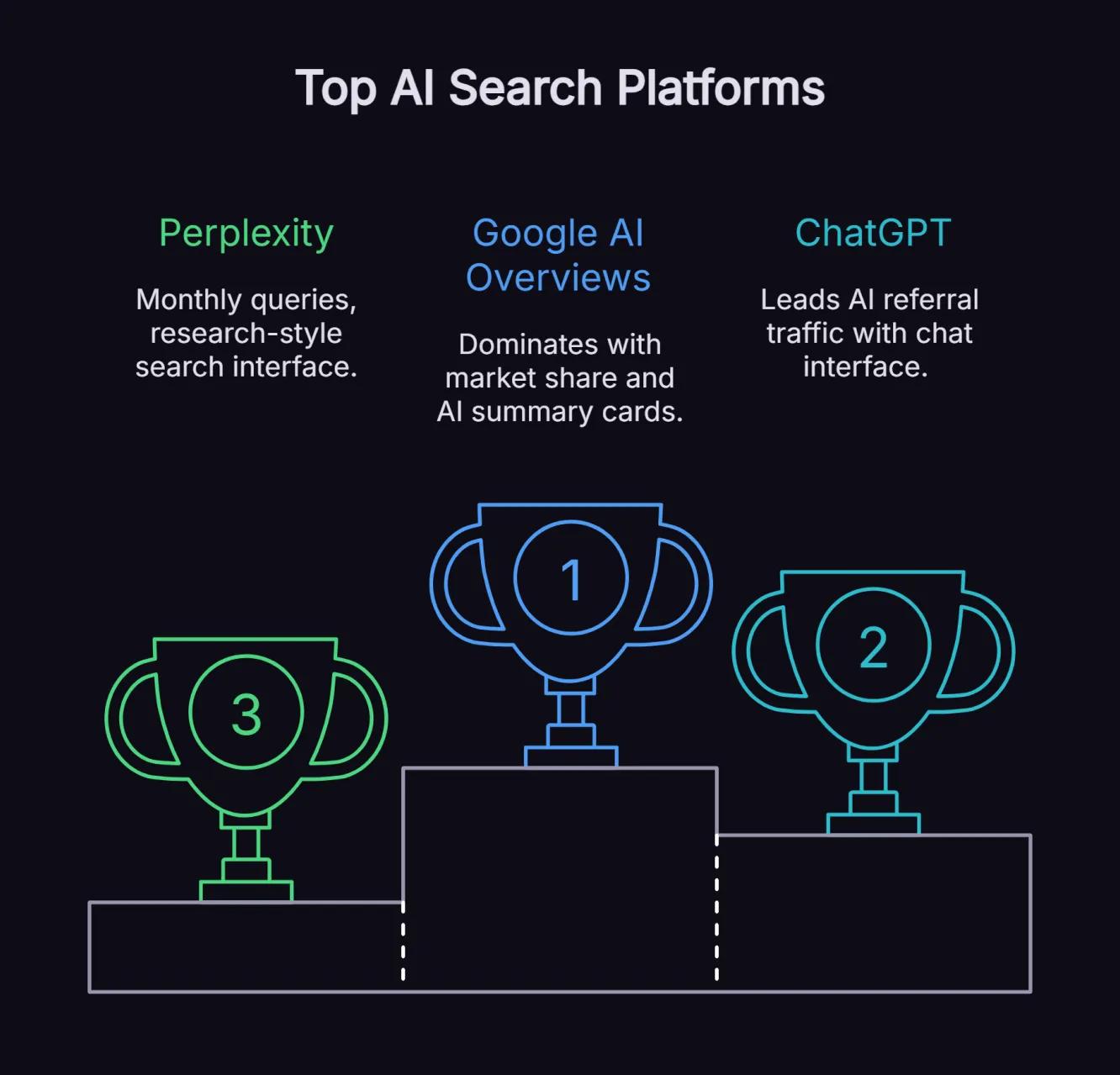
Instead of chasing a secret trick, focus on strong fundamentals.
Make your website:
- Useful
- Clear
- Accurate
- Relevant
- Trustworthy
- Easy to understand
- Technically accessible
You should also build strong information around your brand.
Make it easy to understand:
- What your company does
- What products you sell
- What services you provide
- Where you operate
- Who you serve
- What makes your business different
This is especially important for local businesses and product companies.
AI Search Optimization for Local Businesses
Local businesses can benefit greatly from clear and accurate information.
Suppose you operate a restaurant in Islamabad.
Your website should clearly explain:
- Restaurant name
- Location
- Address
- Phone number
- Opening hours
- Menu
- Services
- Cuisine
- Parking information
- Delivery options
- Customer questions
Instead of simply saying:
We are a restaurant in Islamabad.
Give useful information:
We are a family restaurant in Islamabad serving Pakistani and continental food. We offer dine-in, takeaway, and delivery services.
The second example gives much more context.
Important Local SEO Elements
Make sure your business information is consistent across the web.
Pay attention to:
- Google Business Profile
- Business directories
- Local citations
- Customer reviews
- Location pages
- Business website
- LocalBusiness structured data
- Contact information
Local customers often ask detailed questions.
Your website should answer those questions.
AI Search Optimization for E-Commerce Websites
E-commerce websites have another major opportunity.
Product pages should provide detailed information that helps customers make decisions.
A weak product description might say:
Premium wireless headphones.
A stronger description could explain:
These wireless headphones feature active noise cancellation, Bluetooth connectivity, a lightweight design, and a long battery life for travel, office work, and everyday use.
Also include:
- Product specifications
- Dimensions
- Materials
- Compatibility
- Price
- Availability
- Warranty
- Delivery information
- FAQs
- Customer reviews
- Product comparisons
Create buying guides too.
For example:
Best Wireless Headphones for Office Work
or:
Wireless Headphones vs Wired Headphones: Which Should You Buy?
This type of content answers real customer questions.
It can also help users understand your products before they buy.
AI Search Optimization for Small Businesses
Small businesses often believe they cannot compete with large websites.
But a small website can have an advantage:
Specific information.
A small business can create content focused on a specific audience, location, service, or problem.
For example, instead of targeting:
Digital marketing
A local agency could create:
Digital Marketing Services for Small Businesses in Islamabad
Then create supporting content:
- SEO for Islamabad businesses
- Facebook Ads for local businesses
- Google Ads for small businesses
- Local SEO guide
- E-commerce marketing
- Social media marketing
This creates a focused topic area.
The goal is not to publish thousands of pages.
The goal is to publish useful pages that genuinely answer customer questions.
The Role of E-E-A-T in AI Search Optimization
You may have heard the term E-E-A-T.
It stands for:
- Experience
- Expertise
- Authoritativeness
- Trustworthiness
These ideas are useful when creating high-quality content.
Experience
Show real-world experience where relevant.
Expertise
Demonstrate knowledge of the topic.
Authoritativeness
Build a reputation through quality content, references, mentions, and trusted information.
Trustworthiness
Make information accurate, transparent, and easy to verify.
For a business website, trust can also come from:
- Clear contact information
- Company details
- Author information
- Customer reviews
- Secure website
- Transparent policies
- Accurate product information
The main goal is to make users feel confident in the information.
Keyword Research for AI Search
Keyword research still matters.
But AI Search Optimization encourages you to think beyond short keywords.
Consider four types of searches.
Short Keywords
AI SEO
Long-Tail Keywords
How can I optimize my website for AI search?
Question Keywords
What is AI Search Optimization?
Conversational Searches
How do I make my website appear in AI search results?
Users may also search by describing a problem.
For example:
Why is my website not appearing in Google search?
This gives you an opportunity to create content that solves the problem.
Instead of building content around only one keyword, build content around a topic and its related questions.
Important Keywords for AI Search Optimization
If you are creating content around this topic, some useful related terms include:
- AI Search Optimization
- AI SEO
- AI search
- AI search engines
- AI-powered search
- AI SEO strategy
- AI content optimization
- AI search visibility
- AI search results
- AI-generated answers
- optimize for AI search
- Generative Engine Optimization
- GEO
- semantic SEO
- search intent
- topical authority
- E-E-A-T
- structured data
- schema markup
- entity SEO
- conversational search
- natural language search
Do not try to use every keyword in every article.
Use the terms that genuinely fit the topic.
Common AI Search Optimization Mistakes
AI Search Optimization is still a developing area, and many businesses make the same mistakes.
Keyword Stuffing
Repeating the primary keyword does not automatically improve your content.
Write naturally.
Publishing Unedited AI Content
AI tools can help with research and drafting, but content should still be reviewed.
Check:
- Facts
- Examples
- Grammar
- Sources
- Claims
- Accuracy
- Original value
Add your own experience and useful information where possible.
Writing Only for Search Engines
Your reader should always come first.
If an article is difficult to read because it is stuffed with keywords, it has failed its main purpose.
Creating Thin Content
Do not create pages that say almost nothing.
A page should solve a problem or provide useful information.
Making Guaranteed Claims
Avoid claims such as:
“Use these five steps and ChatGPT will rank your website.”
No legitimate SEO strategy can guarantee that.
AI search systems can change, and their selection processes can vary.
Ignoring Traditional SEO
AI Search Optimization is not a replacement for technical SEO, content quality, authority, or good website structure.
How to Measure AI Search Optimization
Measuring AI search visibility can be more difficult than measuring traditional search rankings.
There may not always be a simple dashboard showing every time an AI system mentions your website.
However, you can monitor several useful signals.
Track:
- Organic traffic
- Search impressions
- Search clicks
- Branded searches
- Website conversions
- Referral traffic
- Important keyword rankings
- Brand mentions
- AI citations where measurable
- Leads
- Sales
You can also manually test important questions.
For example, if you sell accounting software, search for questions such as:
What is the best accounting software for a small business?
What accounting software is suitable for Pakistani businesses?
What should I look for in accounting software?
Then check how your brand appears across different search experiences.
Do not treat manual checks as a perfect measurement system.
They are simply one way to understand your visibility.
AI Search Optimization Checklist
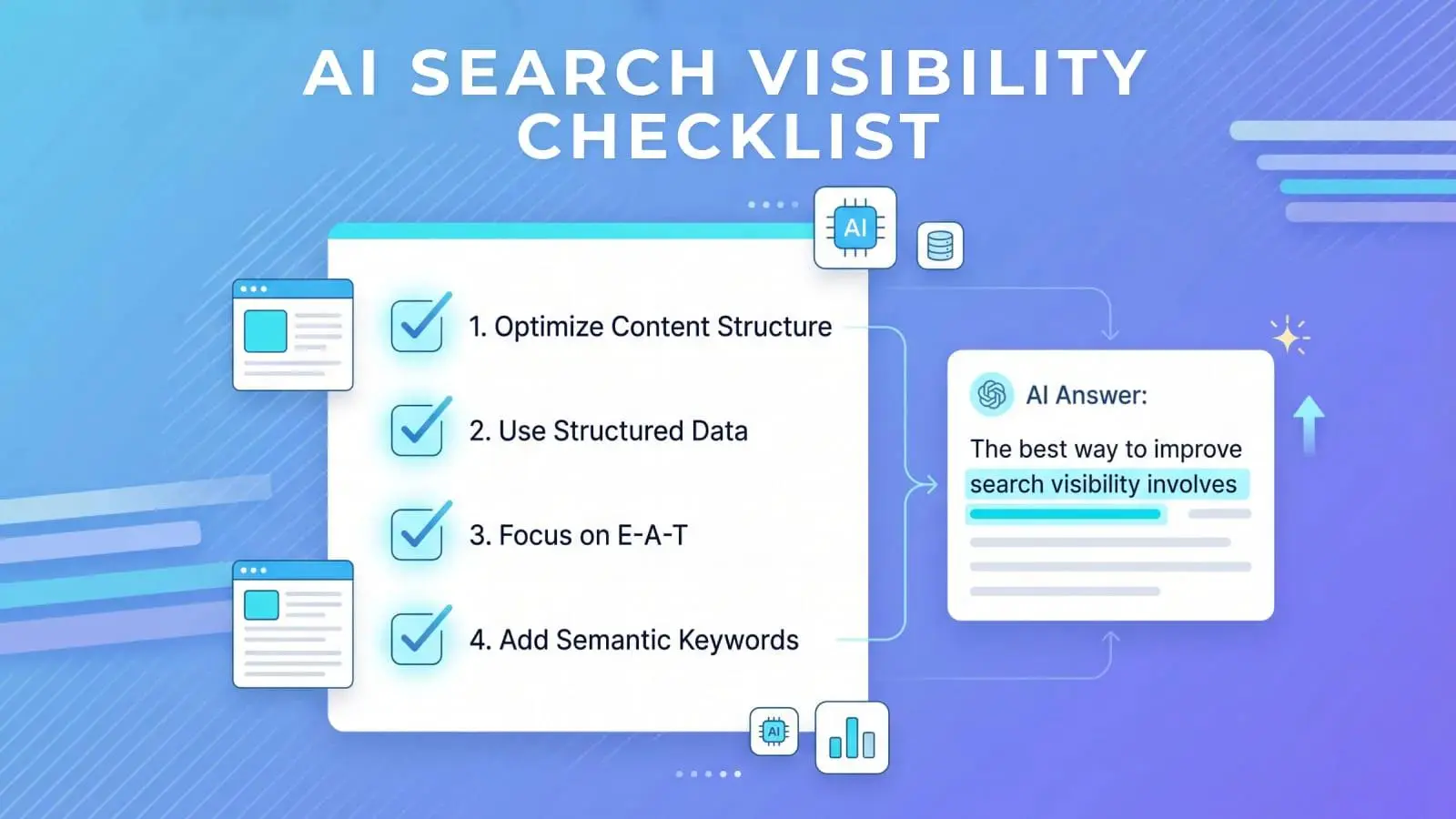
Use this checklist when reviewing your website.
- Identify your main audience
- Research customer questions
- Identify search intent
- Create helpful content
- Use clear headings
- Answer important questions directly
- Cover related topics
- Use natural language
- Build topical authority
- Add useful internal links
- Reference reliable sources
- Add author information
- Keep important content updated
- Improve page speed
- Make the website mobile-friendly
- Check crawlability
- Check indexability
- Create an XML sitemap
- Use appropriate structured data
- Optimize images
- Improve local business information where relevant
- Add detailed product information for e-commerce websites
- Monitor traffic and conversions
- Track brand visibility
- Review AI search visibility regularly
The Future of AI Search Optimization
Search is moving from simple keywords toward questions, conversations, and answers.
A user no longer needs to search only:
“best laptop”
They can ask:
“I need a laptop for video editing, web development, and gaming under a specific budget. What should I buy?”
This changes how websites should create content.
Businesses should think about the questions their customers ask before, during, and after a purchase.
For example, an accounting software company could create content around:
- What is accounting software?
- How does accounting software work?
- What features should small businesses look for?
- How much does accounting software cost?
- How can businesses manage invoices?
- How can businesses track expenses?
- What is the difference between accounting software and ERP?
- How should a business choose accounting software?
This creates a useful information network.
The future of search is not simply about getting a higher position for one keyword.
It is increasingly about being a useful and trusted source of information across many related questions.
Frequently Asked Questions About AI Search Optimization
What is AI Search Optimization?
AI Search Optimization is the process of improving website content and technical SEO so AI-powered search systems can better understand, discover, and potentially use that information when creating answers.
Is AI Search Optimization the same as SEO?
No. The two are closely related, but AI Search Optimization focuses more on visibility within AI-powered search experiences. Traditional SEO remains important because websites still need good technical foundations, useful content, authority, and search visibility.
What is GEO in SEO?
GEO usually means Generative Engine Optimization. It refers to strategies designed to improve the chances that content is understood, referenced, or surfaced by generative AI systems.
How do I optimize my website for AI search?
Create helpful content, answer questions clearly, use descriptive headings, build topical authority, provide reliable information, improve technical SEO, use appropriate structured data, and keep important information updated.
Can AI-generated content rank in search engines?
AI-generated content can appear in search results, but simply using AI does not guarantee good rankings. Content should be useful, accurate, well-written, and created to satisfy the user’s needs.
How can I get my website mentioned by AI?
There is no guaranteed method. Improve your website’s relevance, authority, accuracy, technical accessibility, and content quality. Publish useful information that answers real questions and build a strong presence around your topic.
Does traditional SEO still matter for AI search?
Yes. Technical SEO, crawlability, content quality, authority, internal links, structured data, and user experience remain important parts of a strong search strategy.
Is AI Search Optimization important for small businesses?
Yes. Small businesses can use AI Search Optimization to create detailed content around their services, products, locations, and customer questions. Being specific can help a small website demonstrate strong knowledge in its niche.
What keywords should I target for AI search?
Use a mix of traditional keywords, long-tail keywords, question-based searches, conversational queries, and related topic terms. Focus on the problems and questions your audience actually has.
How long does AI Search Optimization take?
There is no fixed timeline. Results depend on factors such as your website’s current authority, technical health, competition, content quality, and the search platforms being measured.
Can I optimize my website for ChatGPT?
You can improve your website’s content quality, clarity, relevance, authority, and technical accessibility. However, there is no guaranteed technique that makes a website appear in every ChatGPT answer.
What is the difference between AI SEO and GEO?
AI SEO is a broad term for SEO strategies connected to AI-powered search. GEO specifically focuses on optimization for generative AI systems and their generated responses. The terms can overlap.
Conclusion: Start Optimizing for AI Search Today
AI Search Optimization is becoming an important part of modern digital marketing.
But it should not be treated as a replacement for SEO.
The strongest approach is to combine traditional SEO fundamentals with content designed for modern search experiences.
Start by making your website technically healthy.
Then create content that answers real questions.
Use clear headings.
Write in natural language.
Build topical authority.
Show experience and expertise.
Use reliable sources.
Keep information updated.
Make your business, products, and services easy to understand.
Most importantly, write for people first.
There is no secret formula that guarantees a website will appear in every AI-generated answer. Search systems can change, and different AI platforms may use different methods.
What you can control is the quality of your website.
If your content is useful, accurate, clear, trustworthy, and easy to understand, you give both users and modern search systems a much better reason to use your information.
The future of search is moving beyond simple keywords.
It is becoming more conversational, more direct, and more focused on answers.
Businesses that start building clear and useful digital content now will be better prepared for that future.
“AI Search Optimization is not about trying to trick AI. It is about making your website the best possible source of information for the people you want to reach”.


Leave a response