


Starting a new website is exciting, but getting organic traffic from Google can be challenging.
One of the biggest mistakes new website owners make is targeting keywords with millions of monthly searches simply because the search volume looks attractive.
For example, a keyword such as “keyword research” may have enormous search demand, but it can also have extremely strong competition. A new website with very little authority may struggle to compete with established websites that have thousands of backlinks, years of content, and strong domain authority.
That does not mean you should ignore keyword research.
It means you need a different keyword research strategy.
Instead of trying to rank immediately for extremely competitive keywords, a new website should look for relevant, specific, lower-competition search terms and build topical authority over time.
In this guide, you’ll learn how to perform keyword research for a new website, how to find low-competition keywords, how to use long-tail keywords, and how to decide which keywords are actually worth targeting.
What Is Keyword Research?
Keyword research is the process of discovering and analyzing the words and phrases people type into search engines when looking for information, products, services, or solutions.
For example, someone interested in SEO might search for:
- SEO
- keyword research
- keyword research tools
- keyword research for beginners
- how to find keywords
- how to find low competition keywords
- keyword research for a new website
These searches may all relate to the same broad topic, but they represent different levels of specificity and different search intentions.
Keyword research helps you understand:
- What your audience is searching for
- How frequently people search for a topic
- How competitive a keyword may be
- What type of content Google is showing
- What search intent exists behind a query
- Which topics your website should cover
The goal isn’t simply to find keywords with the highest search volume. The goal is to find keywords that are relevant, achievable, and valuable to your audience.
Why Keyword Research Is Different for a New Website
A new website usually doesn’t have the same authority as an established website.
Established websites may have:
- Hundreds or thousands of indexed pages
- Strong backlinks
- Brand recognition
- Years of publishing history
- Existing organic traffic
- Strong topical authority
A new website usually has none of these advantages yet.
This is why targeting a keyword with extremely high competition can be inefficient during the early stages of SEO.
For a new website, it is often more practical to begin with specific, lower-competition queries.
Long-tail keywords are commonly useful here because they tend to be more specific and, in many cases, less competitive than broad head terms. However, being “long-tail” does not automatically mean a keyword is easy to rank for. Competition still needs to be evaluated individually.
Your strategy should therefore be:
Start specific → build authority → earn rankings → expand into broader keywords.
What Is a Long-Tail Keyword?
A long-tail keyword is a specific search query that usually has a narrower search intent than a broad keyword.
For example:
Broad keyword:
Keyword research
More specific:
Keyword research for beginners
Even more specific:
Keyword research for a new website
Very specific:
How to find low competition keywords for a new website
The more specific query may have considerably less search volume, but it can better match what a particular searcher wants.
Search Volume Is Not Everything
One of the biggest mistakes beginners make during keyword research is choosing keywords entirely based on search volume.
Imagine you have two keywords:
| Keyword | Monthly Searches | Difficulty |
|---|---|---|
| Keyword A | 100,000 | Very High |
| Keyword B | 800 | Low |
At first glance, Keyword A looks much better.
But if your new website has almost no chance of ranking for Keyword A, that 100,000 search volume doesn’t help you much.
Keyword B may be much more realistic.
If you eventually rank near the top for Keyword B, you could generate consistent organic traffic and use that success to build your site’s authority.
This is why keyword research should consider several factors:
Search volume + competition + search intent + relevance + business value
What Is Keyword Difficulty?
Keyword Difficulty, often abbreviated as KD, is a metric used by SEO tools to estimate how difficult it may be to rank for a particular keyword.
Different SEO platforms calculate difficulty differently, so you should not treat a difficulty score as an absolute measurement.
For example, one tool might show a keyword as easy while another gives it a much higher difficulty score.
Therefore, don’t make your decision based solely on the number.
Instead, use keyword difficulty as a filter, then inspect the actual search results.
For a new website, you can initially prioritize lower-difficulty opportunities and gradually become more ambitious as your website develops authority.
How to Find Low-Competition Keywords for a New Website
Now let’s get into the practical process.
Step 1: Start With Your Main Topic
First, choose a broad topic related to your website.
For example, if your website focuses on SEO, you might start with:
SEO
Your keyword research tool can then generate hundreds or thousands of related terms.
You could also start with:
Keyword research
The tool might show suggestions such as:
- keyword research tools
- keyword research for beginners
- keyword research strategy
- keyword research examples
- long-tail keyword research
- free keyword research
- keyword research for new websites
Don’t immediately choose the highest-volume keyword.
Instead, start filtering the results.
Step 2: Filter for Lower Competition
If your keyword tool allows you to filter by Keyword Difficulty, start with relatively low difficulty.
A practical starting range for a very new website might be:
0–20: Strong opportunity to investigate
20–30: Worth investigating carefully
30–50: Potentially possible, depending on the SERP
50+: Usually requires significantly more authority and a stronger content/link profile
These are not universal rules. Keyword difficulty is a third-party estimate rather than a guarantee of ranking. Even SEO tools acknowledge that KD scores are estimates and should be interpreted alongside other SERP factors.
Step 3: Look for Long-Tail Keywords
Next, look for specific queries.
Instead of:
keyword research
Try finding terms such as:
keyword research for new website
or:
how to find low competition keywords
or:
how to find long tail keywords
These searches are more specific and often provide a clearer idea of what the user wants.
For a new site, this can make content planning much easier.
Step 4: Check Search Intent
Search intent is one of the most important parts of keyword research.
Before creating an article, search the keyword on Google yourself.
Look at the pages ranking on the first page.
Ask:
What type of content is Google showing?
Is it:
- Blog articles?
- Tutorials?
- Product pages?
- Category pages?
- Videos?
- Tools?
- Lists?
- Commercial landing pages?
If Google is showing detailed guides and you want to rank with a detailed guide, your content format is aligned with the SERP.
But if Google is showing mostly tools and product pages, publishing a basic 1,000-word article may not be enough.
Your goal should be to understand the search intent, not simply repeat the keyword throughout your article.
Step 5: Analyze the SERP Before Writing
This is an important step that many beginners skip.
Search your target keyword on Google.
Then analyze the top results.
Look at:
- How authoritative the competing websites are
- How comprehensive their articles are
- What subtopics they cover
- Whether they answer the searcher’s question
- How recently the content was updated
- Whether forums or smaller websites appear
- Whether the results contain weak or outdated content
If the first page is dominated by extremely powerful websites, ranking may be difficult.
But if you see smaller websites, forums, outdated articles, or content that doesn’t completely answer the query, you may have an opportunity.
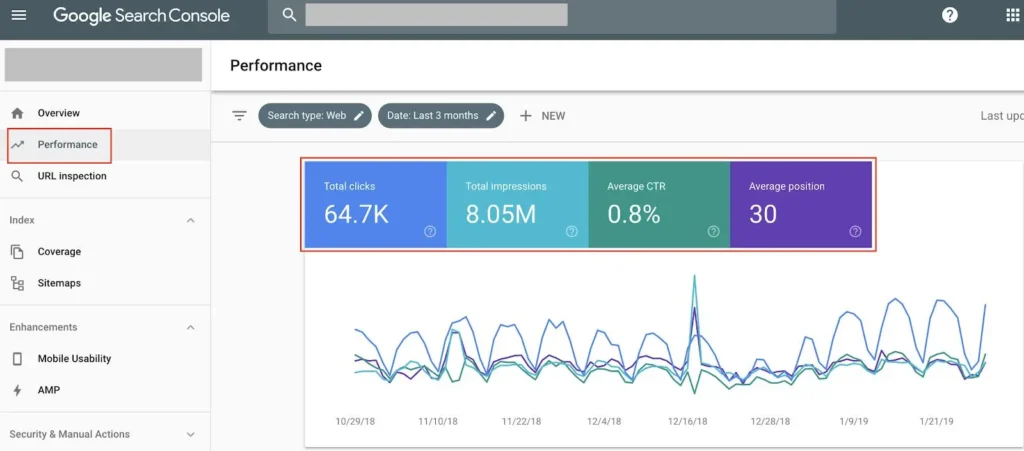
Google Search Console can also become extremely valuable once your website starts receiving impressions because it shows the queries that lead users to your site, along with clicks, impressions, CTR, and average position.
Step 6: Don’t Ignore Questions
Question-based keywords can be excellent content opportunities.
Examples include:
- How do I find low competition keywords?
- How many keywords should a new website target?
- What is keyword difficulty?
- How do I find long-tail keywords?
- Should a new website target high-volume keywords?
- What is the difference between search volume and keyword difficulty?
These questions can become individual articles or sections within a larger guide. how to find low competition keywords
A good strategy is to use one major topic as your pillar and create supporting content around closely related questions.
Step 7: Build a Keyword Cluster
Don’t think of keyword research as:
One keyword = One article
Instead, think in terms of topics and clusters.
For example:
Main Topic > Keyword Research
Supporting Topics
- Keyword research for beginners
- Keyword research for new websites
- Low competition keywords
- Long-tail keywords
- Keyword difficulty
- Search intent
- Keyword research tools
- Competitor keyword research
- Search volume
- Keyword mapping
This creates a connected content ecosystem.
Your main article can link to supporting articles, while supporting articles link back to the main guide.
This helps readers discover related information and creates a logical internal linking structure.
How Many Keywords Should a New Website Target?
There is no magic number.
You don’t need to publish 100 articles just because you found 100 keywords.
Instead, focus on content quality and topical coverage.
For example, if you have identified 20 closely related keywords, you may discover that they can be covered naturally by five excellent articles rather than 20 thin articles.
One article might rank for multiple related queries.
For example, this article could potentially target:
- keyword research for a new website
- keyword research for beginners
- low competition keywords
- long-tail keywords
- keyword difficulty
- keyword research strategy
The important thing is that these keywords are related and can be addressed naturally.
Use Google Search Console to Discover New Keywords
Once your content begins appearing in Google Search, your own Search Console data becomes extremely useful.
Google Search Console’s Performance report allows you to see:
- Clicks
- Impressions
- CTR
- Average position
- Search queries
- Pages
For example, you might publish an article targeting:
keyword research for a new website
But after several weeks, Search Console may show that your page is also receiving impressions for:
low competition keywords for new website
or:
keyword research strategy for beginners
Those unexpected queries are valuable.
Google’s Search Console documentation specifically recommends using query data to understand which searches are bringing traffic and where opportunities exist.
You can then improve your article or create a new supporting article based on those queries.
Search Volume vs. Keyword Difficulty: Which Matters More?
Neither metric should be considered in isolation.
Think of keyword selection as a combination of factors.
Search Volume
Shows estimated demand for the keyword.
Keyword Difficulty
Provides an estimate of how competitive the keyword may be.
Search Intent
Tells you what the searcher actually wants.
Relevance
Determines whether the topic makes sense for your website.
Business Value
Determines whether ranking for that keyword could actually help your website.
For example, a keyword with 10,000 searches may generate very little value if the audience isn’t relevant to your website.
A keyword with only 300 searches could be much more valuable if those 300 people are exactly the audience you want.
Should You Target High-Volume Keywords?
Yes but probably not immediately.
High-volume keywords can become part of your long-term SEO strategy.
You don’t need to permanently avoid competitive keywords.
Instead, build toward them.
A sensible progression is:
Phase 1: Low-competition long-tail keywords
↓
Phase 2: Medium-competition keywords
↓
Phase 3: Broader topic keywords
↓
Phase 4: Highly competitive head terms
As your website earns content, links, traffic, and authority, you can gradually target more competitive keywords.
This is one reason long-tail keywords can be useful for newer websites. They can provide realistic entry points into a broader topic rather than forcing a new website to compete immediately for the most difficult search terms.
Common Keyword Research Mistakes
1. Choosing Keywords Only by Search Volume
High volume doesn’t automatically mean high value.
Always consider competition and intent.
2. Ignoring Search Intent
If your article doesn’t satisfy what the searcher wants, ranking can be difficult even if you use the correct keyword.
3. Creating Too Many Similar Articles
Publishing several almost identical articles can create unnecessary overlap.
Instead, combine closely related keywords where appropriate.
4. Keyword Stuffing
Don’t repeat your keyword unnaturally.
Write for people first and use relevant terminology naturally.
5. Ignoring the SERP
Your keyword tool provides data.
Google’s actual search results provide context.
Look at both.
6. Targeting Extremely Competitive Keywords Too Early
A new website doesn’t need to fight the biggest websites immediately.
Start where you have a realistic opportunity.
Final Keyword Strategy for a New Website
If your website is only around one month old, don’t panic because you cannot realistically compete for keywords with millions of searches.
That’s normal.
Your objective right now should be to build a strong foundation.
Start with specific topics.
Target realistic keywords.
Create genuinely useful content.
Build topic clusters.
Connect your articles with internal links.
Earn relevant external links naturally.
Then monitor your performance and expand your keyword targets as your website grows.
Your first goal isn’t to rank for the biggest keyword in your industry.
Your first goal is to earn your first rankings, clicks, impressions, and relevant visitors.
Once you start appearing for smaller queries, your Search Console data can tell you what people are actually searching for. You can use that information to improve existing articles and discover new content opportunities.
SEO is not about finding one magical keyword.
It’s about building a website that consistently answers the questions your target audience is searching for.



Leave a response